
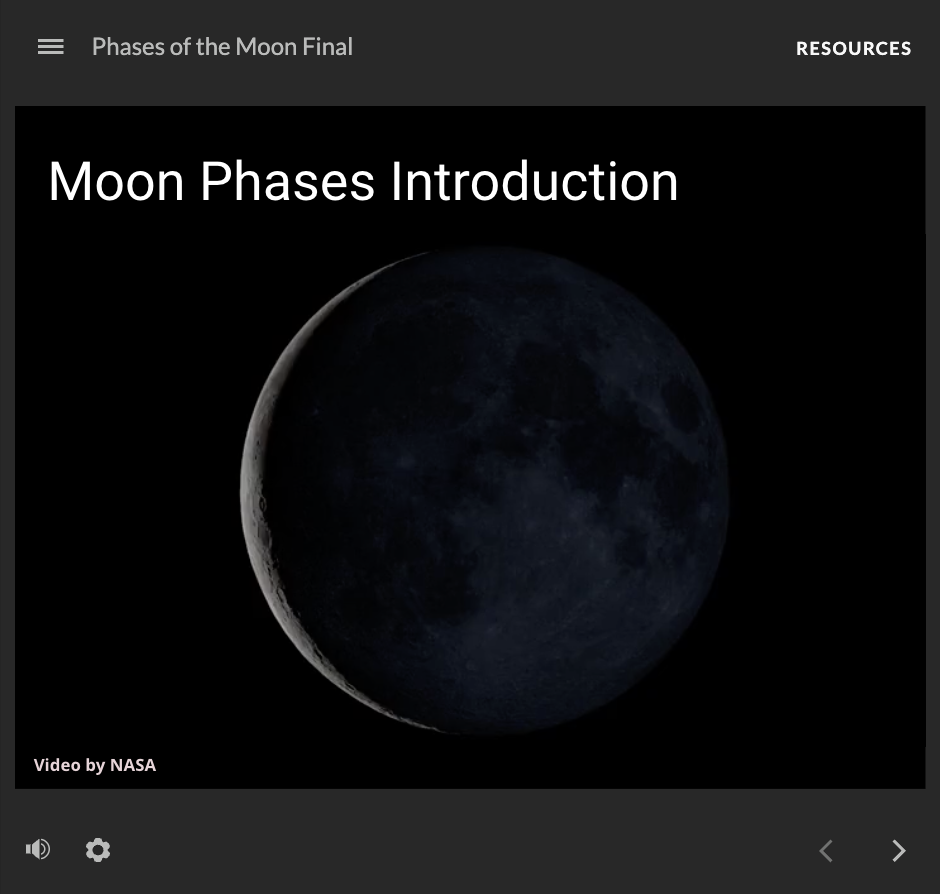
A standalone Articulate Storyline lesson on Moon phases, built with NASA's copyright-free image library. Includes objective setting, content preview, interactive Moon phase identification, and two hotspot quizzes.
An interactive map built in ThingLink to help CU Denver ILT master's students navigate their graduate program. Each map point surfaced course-level information ranked by rigor, based on peer survey data I collected and analyzed. Grounded in adult learning theory, the map helped students self-direct their course sequencing.
A self-paced branching module built in Adobe Captivate for first-time female triathletes. Learners identify their personal mental blocks and are guided through a path of solutions illustrated by real athlete stories and videos. The module uses scenario-based design to meet learners where they are and move them toward action.
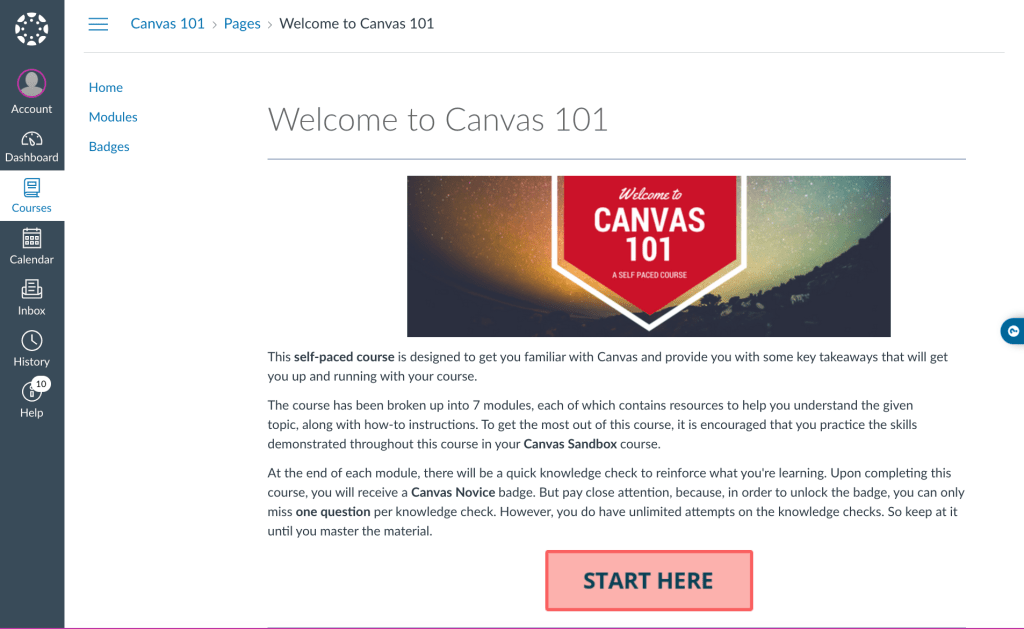
At Colorado School of Mines, I led the campus-wide LMS transition from Blackboard to Canvas. To scale instructor training beyond in-person workshops, I converted the content into a self-paced online course — completing each section earned instructors a Canvas Proficiency badge.
I designed and facilitated Engineering and Facilitating Online Learning (EFOL), a course that taught Colorado School of Mines instructors how to build rigorous online courses using Backward Design. Participants developed learning outcomes and aligned all content, activities, and assessments to them — including accessibility standards. Each participant was assigned an EFOL Makerspace, a mini Canvas course, to build and stack their learning artifacts into a single module containing a content page, discussion board, quiz, and assignment.
Using Adobe Captivate, I built custom Electronic Medical Record software simulations and proficiency assessments for individual healthcare facilities. Each simulation trained doctors, nurses, and registration clerks to execute their exact workflow — click by click — before being assessed on recall. This real-world simulation approach reduces onboarding time and builds confidence with new EMR systems. The work is proprietary; the linked video shows a comparable example of the simulation style.